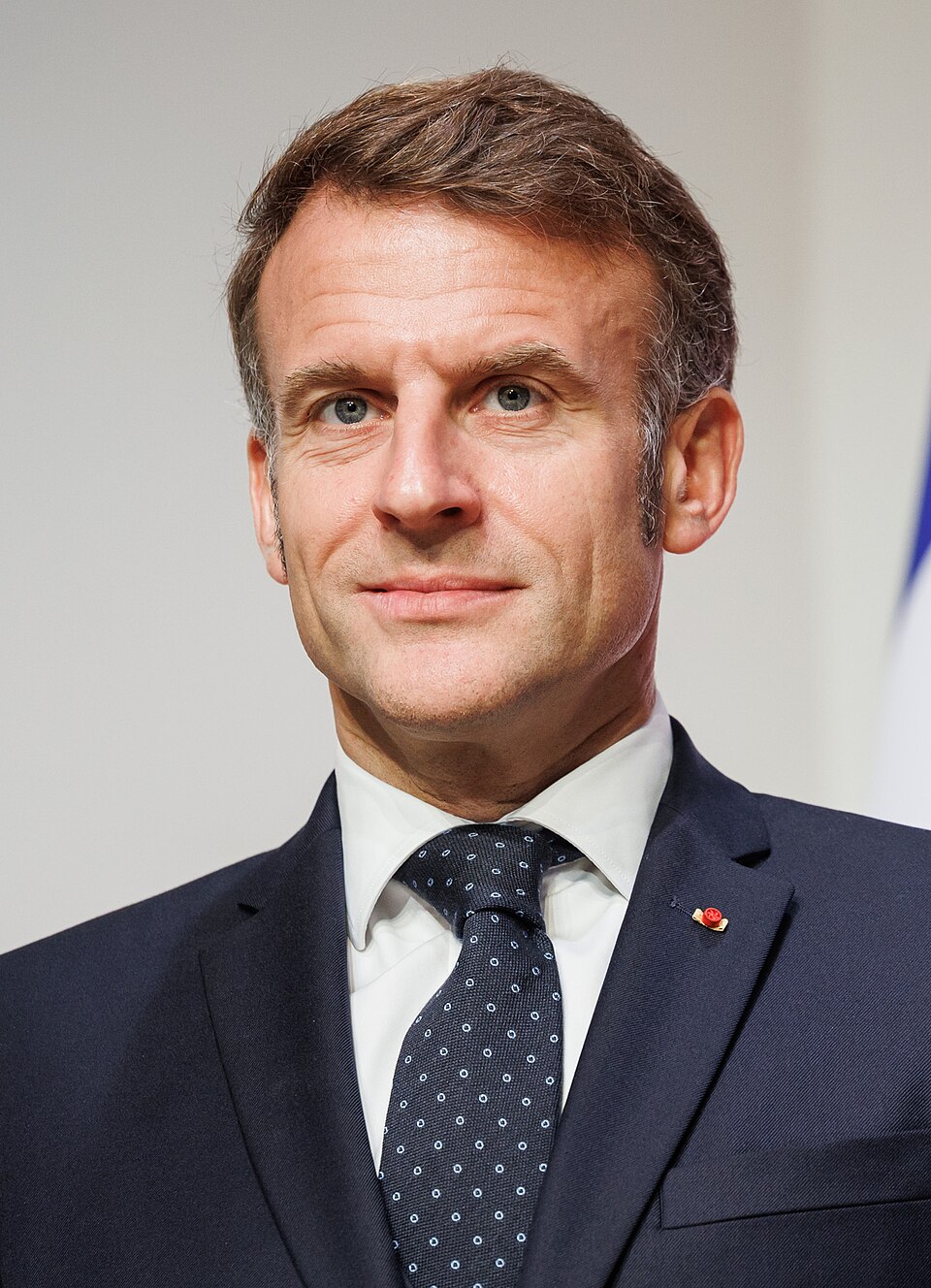
Macron Orders Charles de Gaulle Carrier to Mediterranean: A Firm Stance on Regional Stability
In a decisive move underscoring France's commitment to regional security, President Emmanuel Macron has ordered the deployment of the nation's flagship aircraft carrier, the Charles de Gaulle, along with its full complement of air assets and frigate escort, to the Mediterranean Sea. This significant deployment comes in response to the escalating and volatile situation in the Middle East, signaling a robust and proactive stance from Paris. The announcement, made during a pre-recorded address to the French nation on Tuesday, was met with widespread attention and was extensively covered across French news outlets, including LCI, highlighting the gravity of the situation and the strategic importance of Macron's directive.
President Macron's decision is a powerful testament to France's dedication to protecting its interests, supporting its allies, and contributing to stability in a region fraught with uncertainty. It reflects a continuity in French foreign policy, which often emphasizes strategic autonomy and a willingness to project power when necessary. The deployment not only enhances France's operational capabilities in the region but also sends a clear message about its readiness to act independently and in coordination with European and international partners.
France's Strategic Reassurance: The Charles de Gaulle's Deployment
The command to deploy the Charles de Gaulle, a nuclear-powered aircraft carrier and the pride of the French Navy, is far more than a symbolic gesture. It represents a substantial increase in France's military footprint in the Mediterranean, a crucial waterway linking Europe, Africa, and Asia. Macron explicitly cited "this unstable situation and the uncertainties of the coming days" as the primary drivers behind his order. The carrier, accompanied by its sophisticated air assets, including Rafale fighter jets, and its defensive frigate escort, significantly enhances France's capacity for surveillance, deterrence, and rapid response.
Beyond the carrier group, President Macron confirmed that additional French military capabilities had been deployed to the Middle East in the preceding hours. This includes further Rafale fighter jets, advanced air-defense systems, and airborne radar systems. "And we will continue this effort as much as necessary," Macron affirmed, indicating a sustained commitment. A tangible example of this heightened posture is the deployment of the French frigate Languedoc, which was directed to the coast of Cyprus. This move directly addresses Monday's strike on a British air force base on the island, with Macron noting Cyprus's status as an EU member and a recent strategic partner with France, thereby necessitating French support. Furthermore, French Foreign Minister Jean-Noël Barrot confirmed earlier deployments of Rafale jets over the United Arab Emirates to safeguard French naval and air bases, particularly after a drone strike hit a hangar at a French base in the UAE.
The strategic value of an aircraft carrier in such a volatile context cannot be overstated. It acts as a mobile airbase, capable of launching and recovering aircraft quickly, providing aerial reconnaissance, close air support, and air superiority. Its presence signals a long-term commitment and serves as a powerful deterrent against potential aggressors, while also offering critical support for intelligence gathering and protection of French nationals and assets in the region.
Escalating Tensions and France's Proactive Stance
The decision to dispatch the Charles de Gaulle comes amid heightened tensions following recent conflicts and retaliatory actions in the Middle East. While specific details of the "war" mentioned in the context (which US President Donald Trump had suggested could last weeks or longer) were not elaborated upon by Macron in his address, the references to drone strikes on military bases in Cyprus and the UAE underscore a broader pattern of regional instability. These incidents directly impacted European and French interests, necessitating a decisive response.
France's increased defense posture, decided during a defense council meeting, is aimed at protecting its nationals and bases, and supporting countries in the region targeted by various actors. This proactive approach aligns with France's historical role as a key player in international security, often advocating for a multilateral, yet firm, foreign policy. The presence of hundreds of French navy, air force, and army personnel in the UAE, with Rafale aircraft stationed at Al-Dhafra base near Abu Dhabi, highlights the tangible assets France is committed to protecting.
President Macron’s leadership in this crisis also reflects his broader vision for France's role on the global stage. He has consistently championed European strategic autonomy and asserted France's capacity for independent action. This stance was notably demonstrated in past exchanges with figures like former U.S. President Donald Trump, where Macron firmly stated that Europe would not "passively accept the law of the strongest." Such principles guide France's current moves, emphasizing its commitment to defending its values and interests actively. To understand the broader context of France's independent foreign policy, especially in relation to major global powers, explore more about Macron on Trump & Global Challenges: France's Firm Stance.
Practical Implications of Naval Power Projection
Understanding the deployment of an aircraft carrier goes beyond merely acknowledging its combat capabilities. These colossal vessels serve multiple strategic purposes:
- Deterrence: The sheer presence of a carrier group can dissuade potential adversaries from aggressive actions, signaling a nation's resolve and capacity for retaliation.
- Power Projection: Carriers allow a nation to project air power far beyond its borders, providing a rapid-response capability for various scenarios, from combat operations to humanitarian relief.
- Intelligence Gathering: With advanced radar and surveillance systems, carrier-based aircraft can conduct extensive reconnaissance, providing crucial intelligence on developing situations.
- Diplomatic Tool: The deployment of a carrier can also serve as a strong diplomatic signal, demonstrating support for allies or a commitment to regional stability without immediate engagement in hostilities.
- Protection of Maritime Interests: Safeguarding vital sea lanes and protecting shipping routes are critical functions, especially in a region with significant energy and trade flows.
For observers, understanding these multi-faceted roles offers deeper insight into the strategic thinking behind such a significant military maneuver by President Macron, a decision widely disseminated and analyzed by media outlets like LCI.
The Legacy of Macron's Leadership and France's Global Role
This latest directive from President Macron is emblematic of his dynamic and often unconventional leadership style. Elected in 2017 without the traditional backing of either the Socialist or Gaullist parties, Macron, as France’s youngest head of state since Napoleon I, has consistently sought to carve out a unique path for France. His presidency has been marked by significant domestic reforms, such as the loi Macron, which loosened business restrictions, and bold foreign policy initiatives aimed at solidifying France's influence on the world stage.
Macron's vision for France and Europe involves being a strong, independent actor, capable of asserting its interests and values globally. His pronouncements, whether on Greenland's sovereignty or the need for Europe to defend itself against external pressures, consistently underscore this commitment. The deployment of the Charles de Gaulle fits perfectly into this narrative, demonstrating France's readiness to bear its responsibilities in complex geopolitical landscapes. Despite facing domestic challenges, including a recent call for snap parliamentary elections just weeks before the 2024 Paris Olympics, Macron continues to prioritize France's international standing and security concerns, showcasing a robust dedication to both national and European defense.
Navigating Global Challenges
President Macron's approach to global challenges is characterized by a blend of pragmatism and ambition. He aims to position France as a crucial bridge between different blocs and as a champion for multilateralism, while simultaneously ensuring robust national defense capabilities. The current deployment highlights the delicate balance leaders like Macron must strike between domestic policy, economic stability, and international security commitments.
Conclusion
President Emmanuel Macron's order to deploy the Charles de Gaulle carrier group to the Mediterranean is a powerful demonstration of France's unwavering resolve in the face of escalating regional instability. It solidifies France's position as a critical actor in international security, ready to project its power, protect its interests, and support its allies. This strategic move, widely reported across France by channels such as LCI, underscores Macron's leadership in navigating complex geopolitical challenges and his commitment to a strong, independent French and European foreign policy. As the situation in the Middle East continues to evolve, the presence of the Charles de Gaulle will serve as a crucial element of deterrence and stability, reflecting France's determination to play its part in securing peace and order in a turbulent world.